
It’s often said that history is written by the victors. The act of national mythmaking – America’s, in particular – is a process of elimination and curation, cherry-picking key events as well as deciding the perspective we’re supposed to remember them from. Atrocities are swept under the rug, or they’re sanitized through generalization. History books acknowledge the broad beats of injustice, albeit devoid of compassion, sympathy, or regret. The job of humanizing our shame falls to our artists, but even then, the economic and cultural systems that inform commercial mediums like cinema tend to keep power in the hands of whom it’s always belonged. We bear witness to the pain of racial injustice, but only to the extent that a corporate boardroom permits us.
The Western genre in particular is littered with examples of this phenomenon, in which well-financed productions graft the dominant Anglo worldview onto national mythology. The story of the Wild West is one of frontier speculation and rugged perseverance, but also of the forceful assimilation and outright genocide of Indigenous peoples. John Ford’s THE SEARCHERS (1956) is a prime example– a foundational pillar of the genre, still highly regarded today as a cinematic masterpiece, and yet profoundly problematic due to its negative characterization of the Comanche (which included white actors in redface). The humanity of the Comanche is an afterthought, at best.
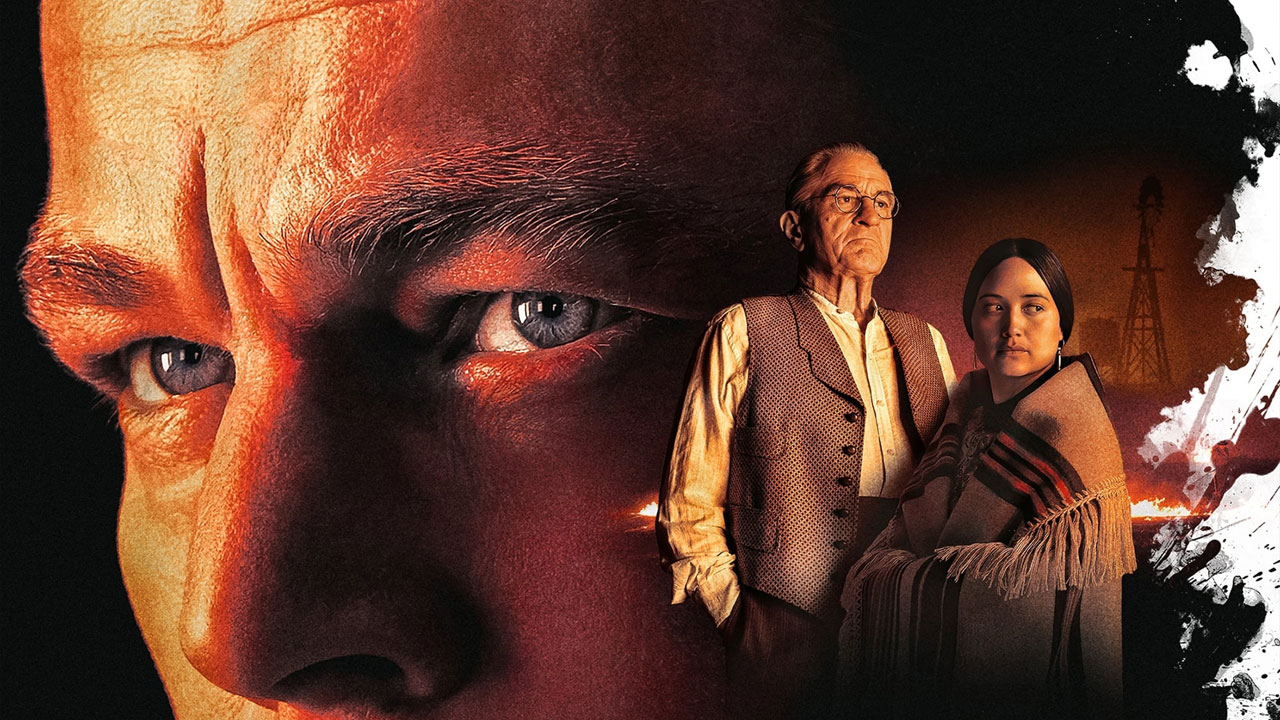
Had director Martin Scorsese made a Western in his youth, he most certainly would have perpetuated this practice – not out of an inherent prejudice, but merely because of a desire to emulate the glamorous Golden Age Hollywood pictures he loved so much. In the five-plus decades he’s been making movies, Scorsese has touched a range of genres, from gangster & crime pictures, to historical costume dramas, horror films, musicals and even whimsical fare intended for children. The desire to make a Western no doubt always laid dormant within him, but the right material never seemed to present itself. That is, until he got his hands on David Grann’s book, “Killers Of The Flower Moon”, a sprawling tome on The Osage Reign of Terror. One of the gravest episodes in our nation’s treatment of Native Americans, the Reign of Terror saw the brutal, systematic extraction of wealth from the Osage by Whites via coercion, force, and outright murder. Adapting the novel as he did in his twilight years, after a lifetime picking apart America’s black heart, Scorsese knew he bore a greater artistic responsibility to his subjects and audience than mere entertainment…
Leave a Reply